Lesson 1.2: What is SEO?
Article by: Matt Polsky
SEO stands for "search engine optimization." SEO is the digital marketing technique of optimizing a site to increase its visibility in search engines like Google and Bing. You can't pay for placement with SEO but can use tactics to optimize entire sites and individual pages towards algorithms that utilize artificial intelligence (AI) and machine learning (ML) models.
"Free" vs. Paid
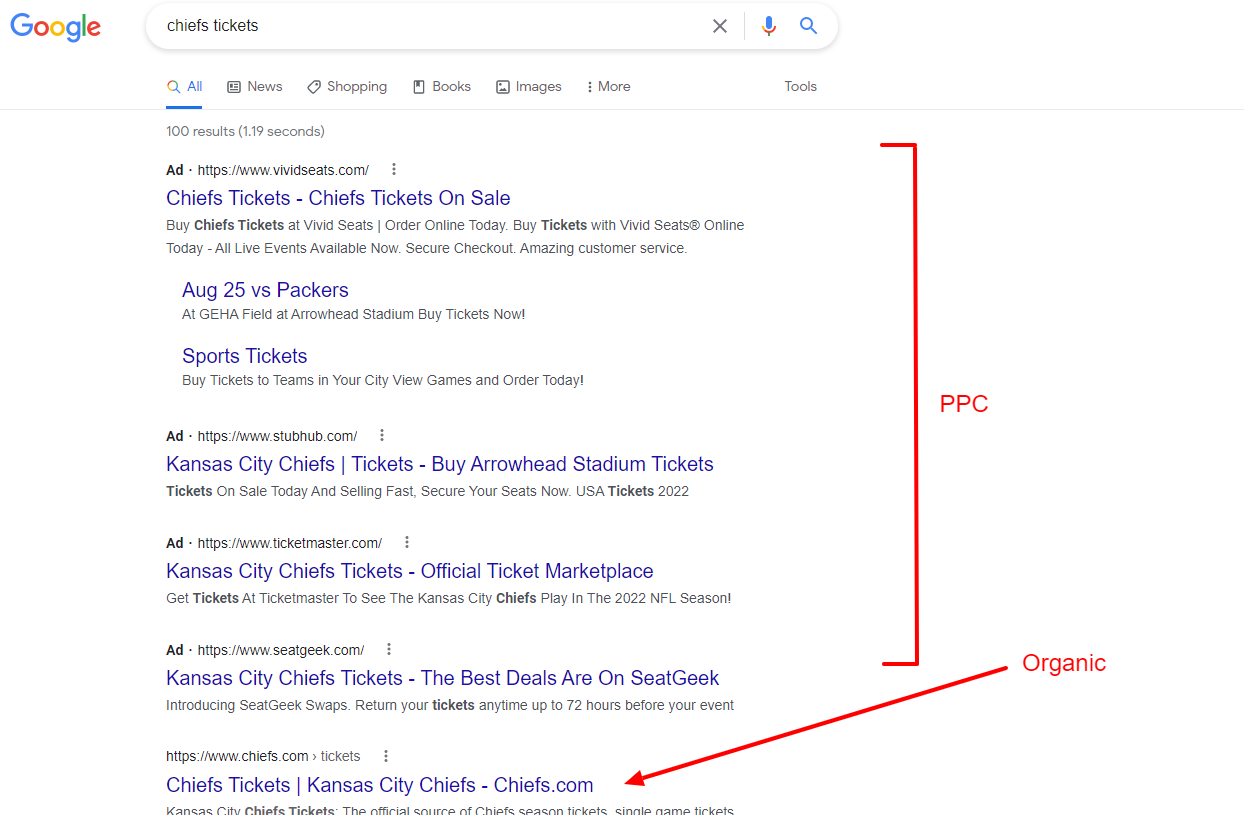
Paid results, often referred to as PPC (pay-per-click) ads, are typically the first 3-4 results and get noted with the word "sponsored" or "ad." PPC ads run on an auction system, and anyone with a Google Ads account and enough money can bid on these keywords.
PPC ads often generate the most revenue for search engines like Google. For example, Google's third-quarter earnings report showed revenues of $177 billion from the first of the year to Sept. 30. Of the $177 billion, nearly $120 billion came directly from search ads.
With most of Google's revenue coming from these placements, they often optimize search engine results pages (SERPs) to be more ad-friendly. For example, it's common to see ad elements that include images, icons, site links and similar features that make ads more noticeable to attract more clicks.
On the other hand, organic results are the "free" listings below the ads. With organic results, you can't pay for placement.
While PPC takes a large section of a SERP, eye-tracking studies have shown that over 70 percent of searchers scroll past ads without a click. The study is fairly dated, but more recent data from the numerous niches I've worked on show organic clicks to have significantly higher intent and more sales, making SEO an integral part of any marketing strategy.
Types of Organic Search Results
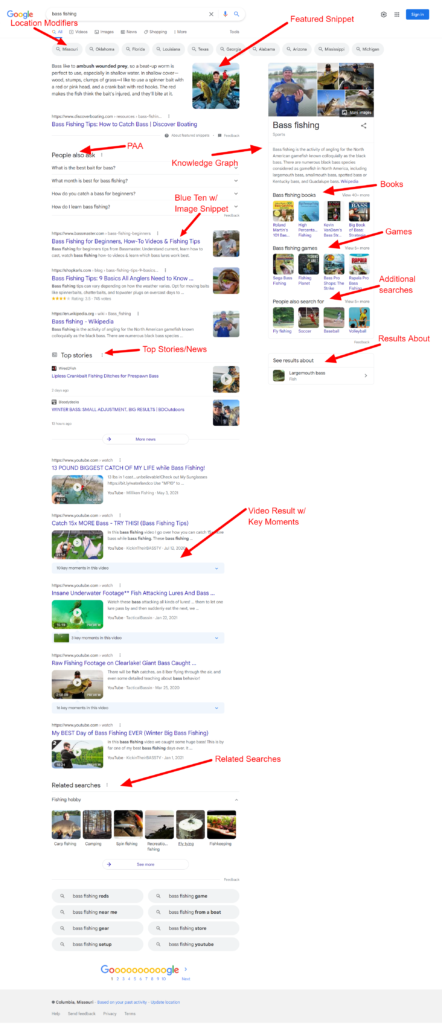
Google utilizes thousands of different types of organic search results and features. They also test these features constantly. Below are the common types of search results you may see on Google.
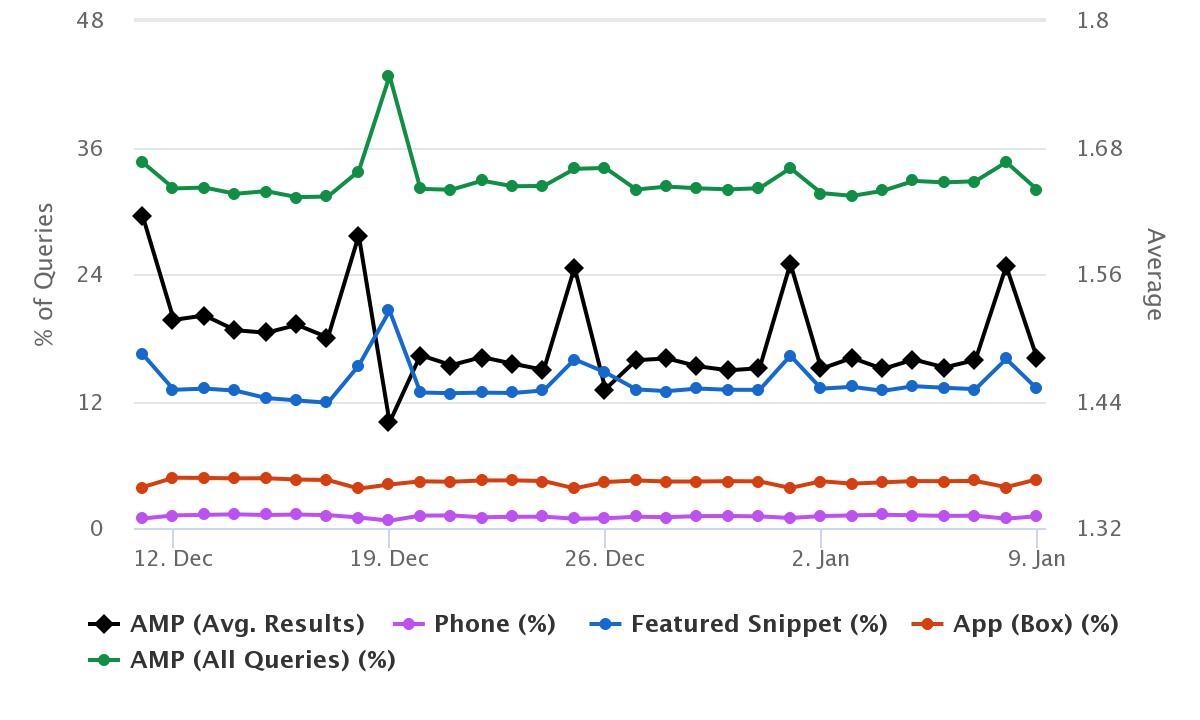
SERP features change constantly. Tools like RankRanger's SERP insights tool provide insight into the types of SERP features in Google and how often they display.
Be sure to key in on the terminology and name of each type of SERP. Understanding the terminology will help as we refer to these SERPs throughout the course.
"Blue Ten"
The "Blue Ten" or "ten blue links" is the typical ten links you receive on a search without additional features. SERPs without features are uncommon anymore. In most cases, Google has ten traditional results on a single page, plus additional features – some of which we'll show below.
Traffic potential is highest on the top 3 results. Within the niches I've operated, more than two-thirds of traffic typically goes to the first result.
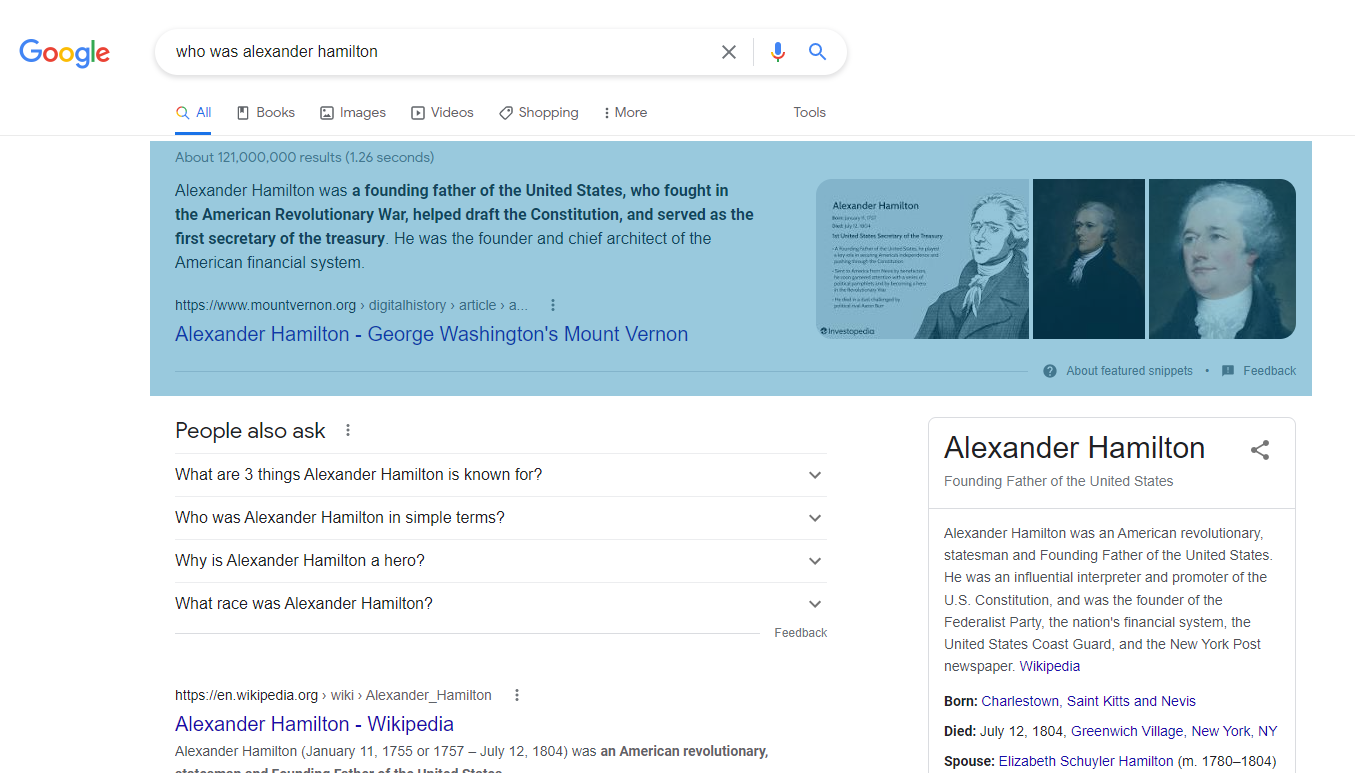
Featured Snippet or Answer Box
Featured snippets, otherwise called answer boxes, typically generate from providing a clear and concise answer to a question or generic term. Traffic potential with featured snippets is very high.
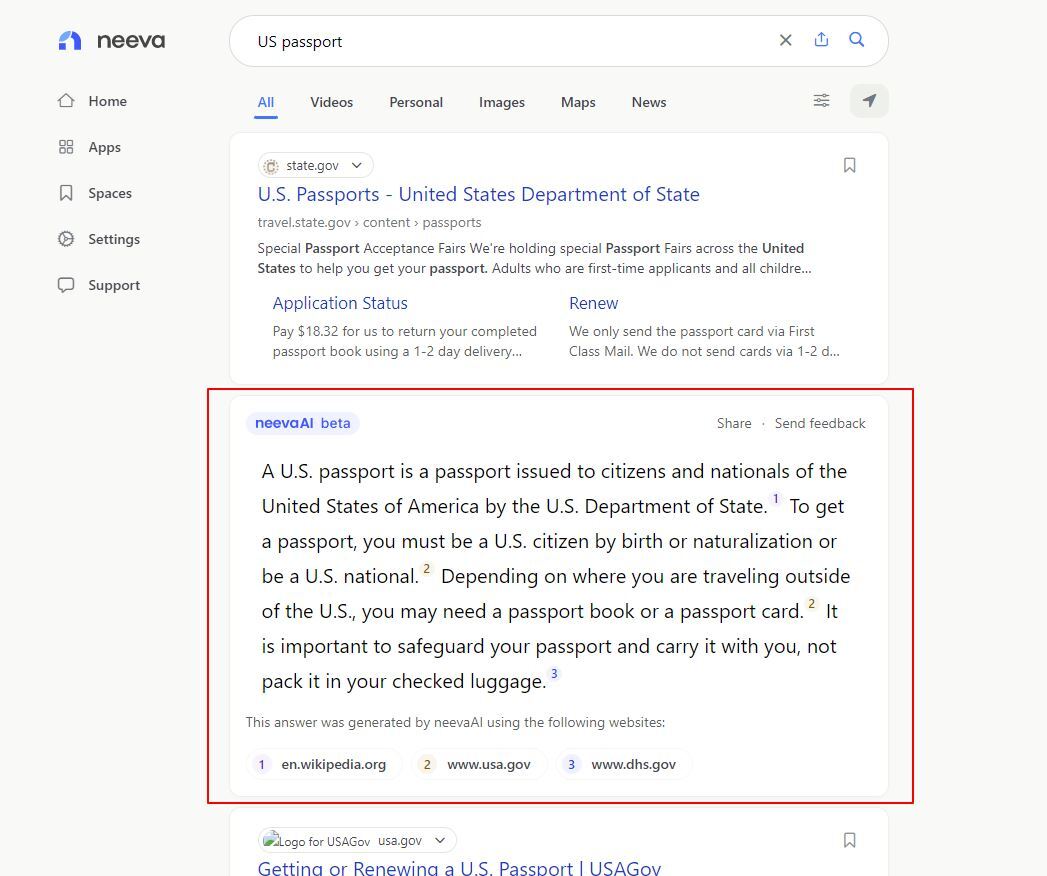
AI Featured Snippet
The screenshot below is from the search engine Neeva. In early 2023, they began using AI to write search results snippets. I assume Google and Bing will follow suit.
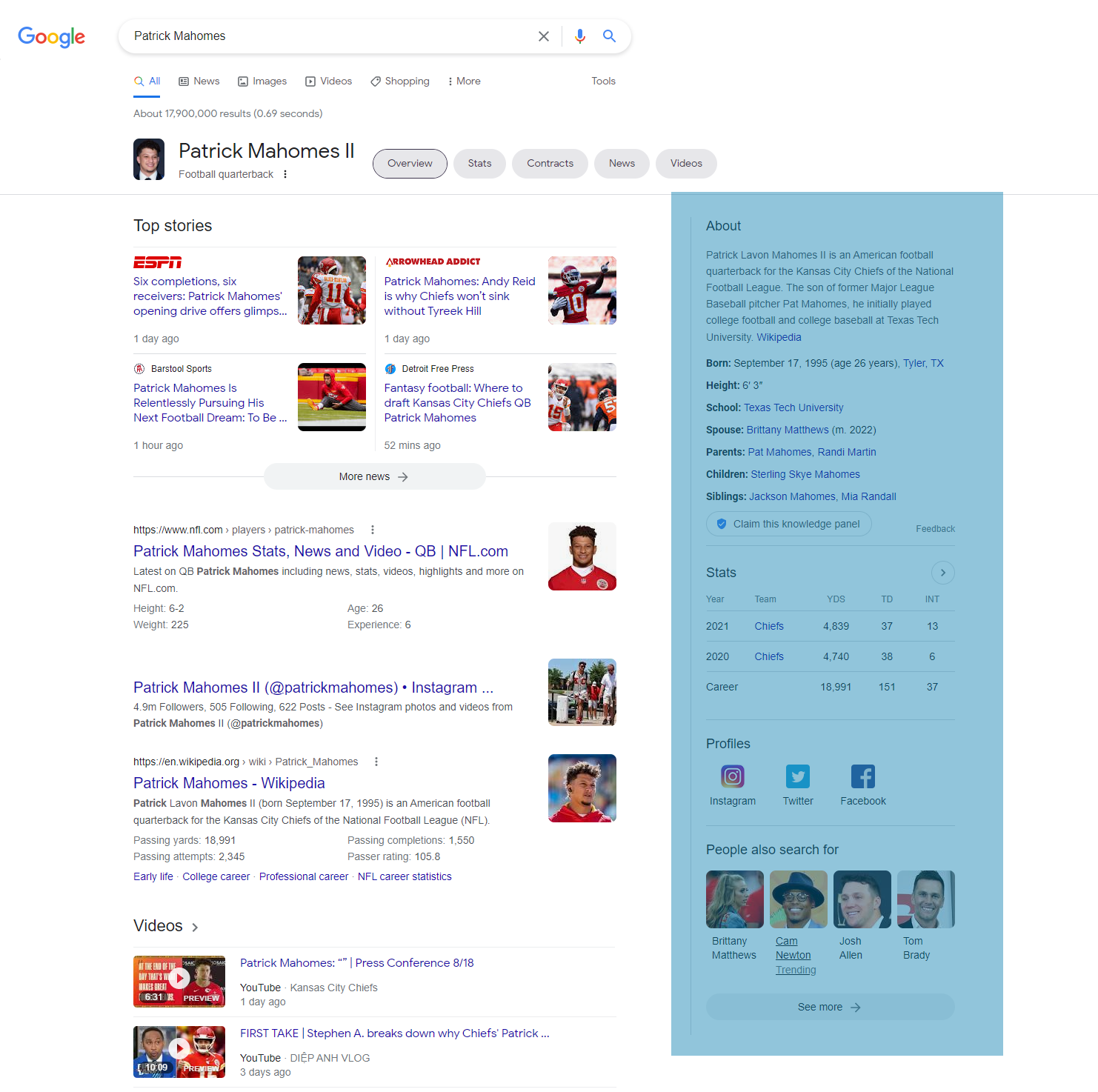
Knowledge Panel
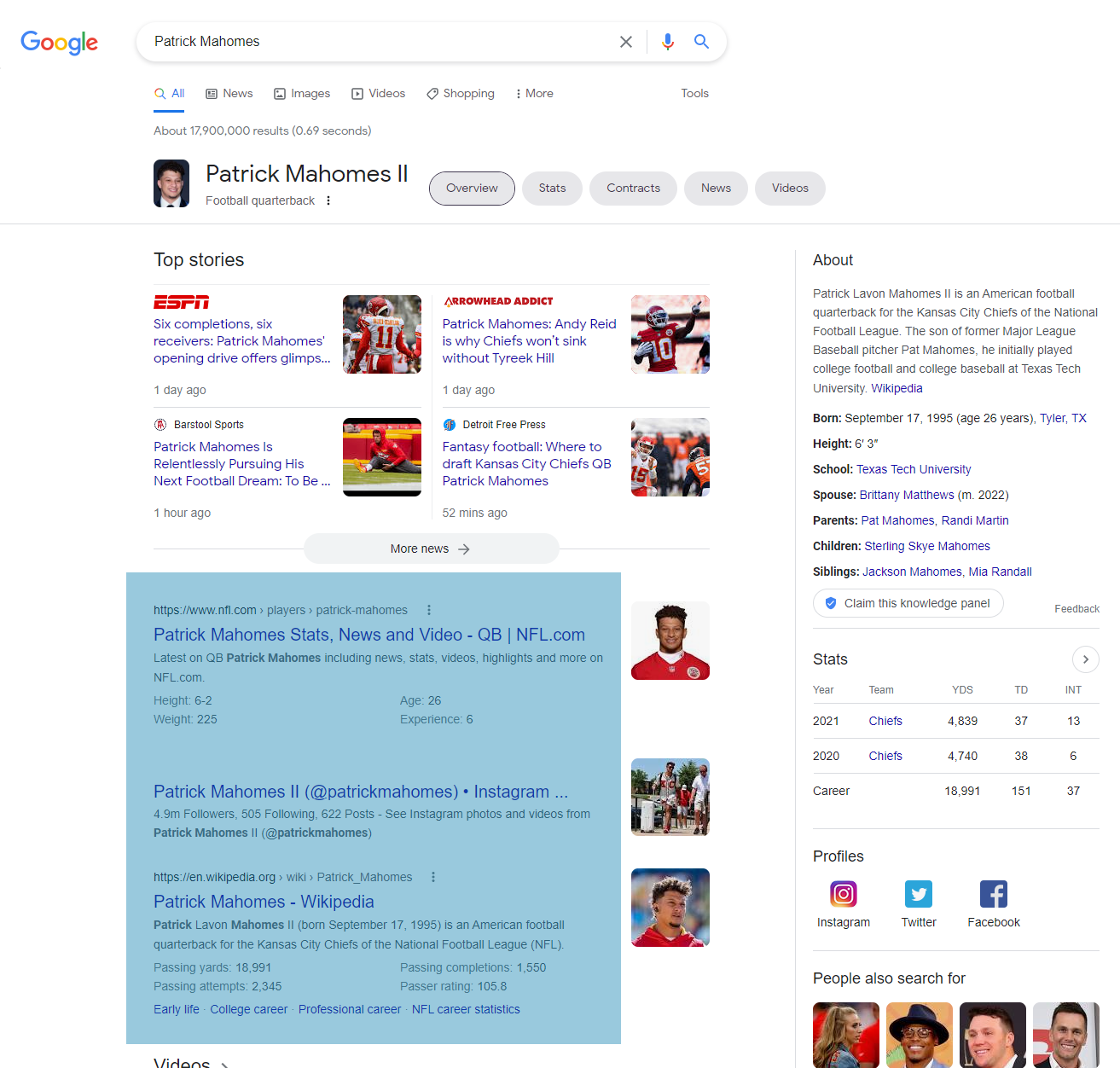
Not to be confused with a Featured Snippet, the Knowledge Panel utilizes a mix of Google's own database of facts (referred to as the Knowledge Graph) and other websites to put together information. These results typically only show for people, brands or places. The traffic potential for a knowledge panel is low-to-moderate.
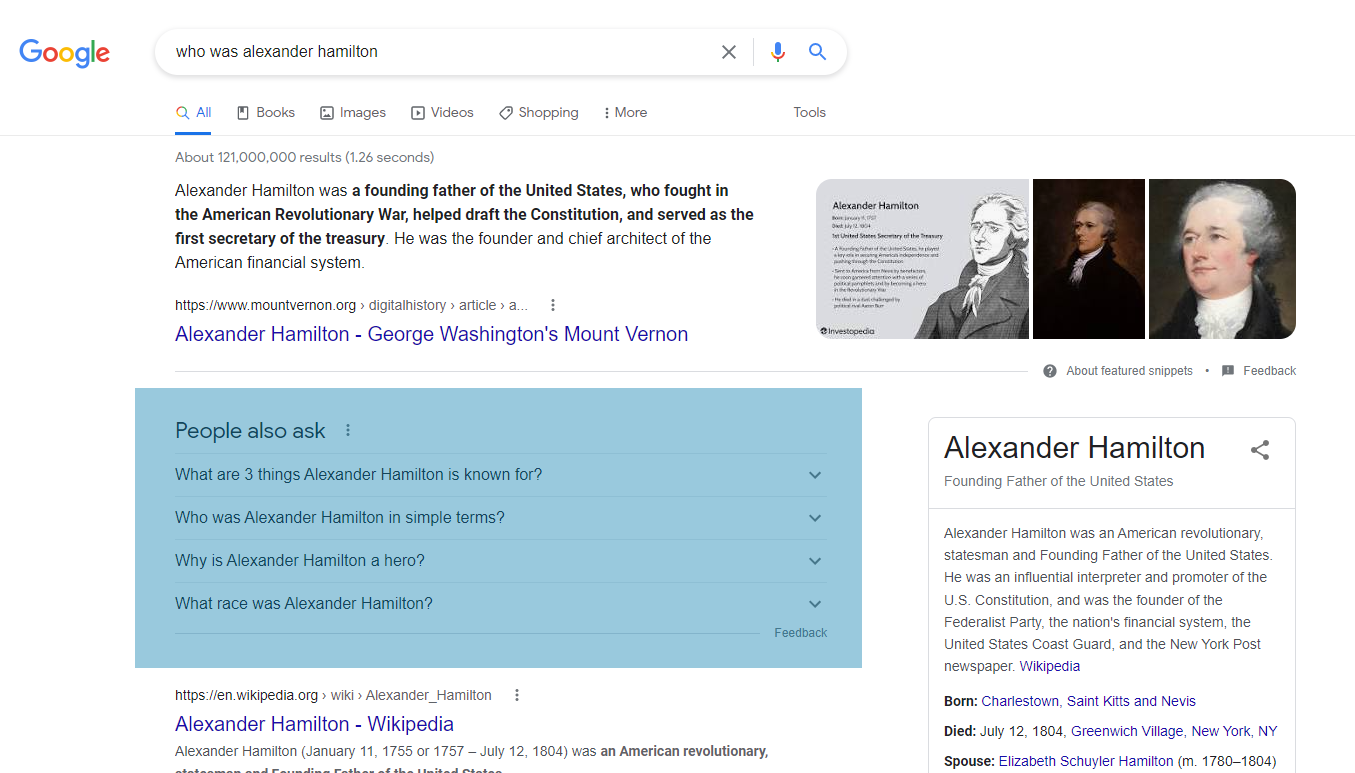
People Also Ask or PAA
PAAs typically display questions related to the initial query. When users click on PAAs, the result is typically a featured-snippet-like answer. Traffic potential for PAAs typically falls in the low-to-moderate level.
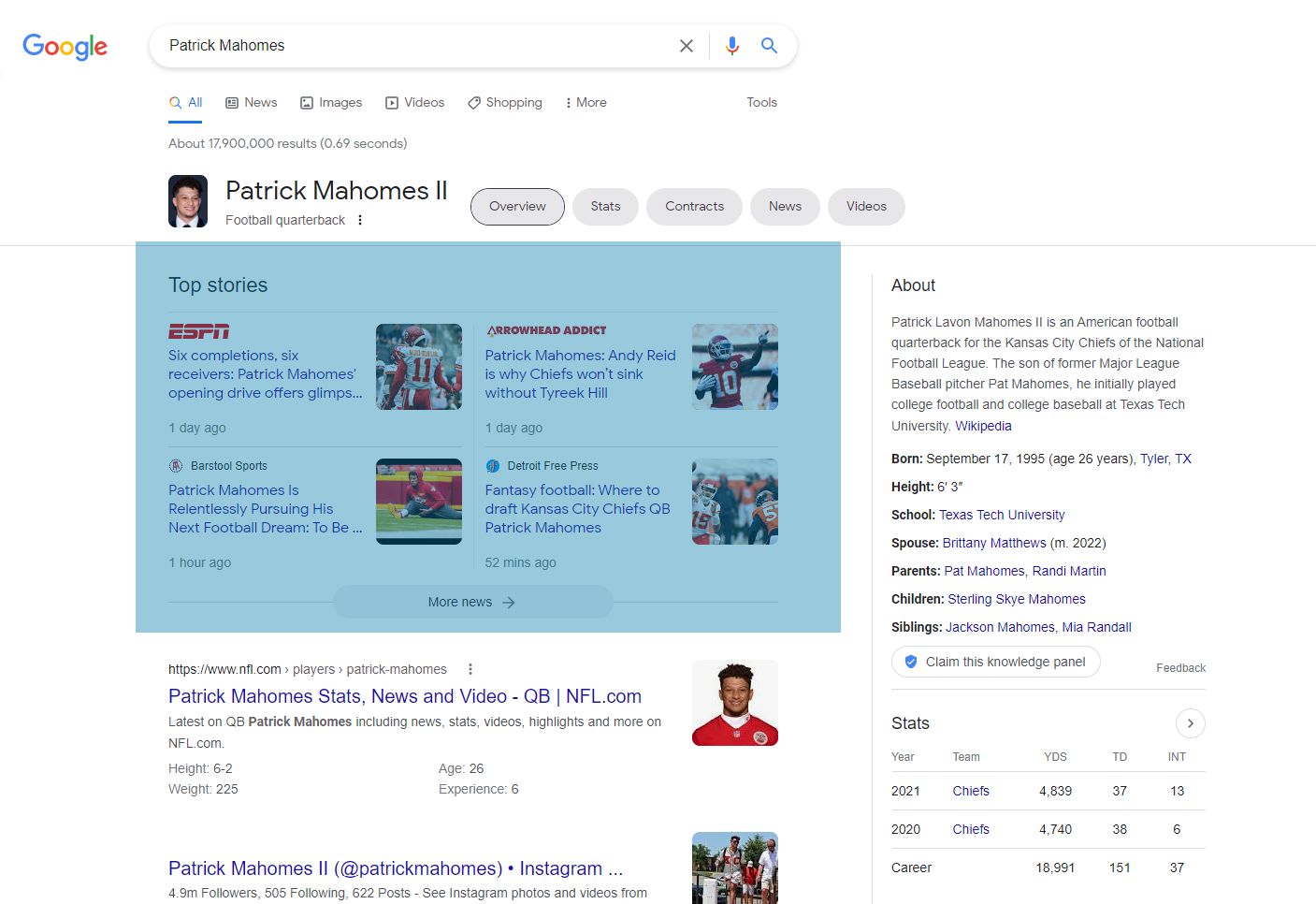
Top Stories
Top stories replaced the prior "News" feature. Google News publishers and timely content often triggers Top Stories. Traffic to Top Stories can be moderate-to-high depending on the query and placement in the SERP (sometimes Top Stories takes the very top result, sometimes it's buried under 5+ results).
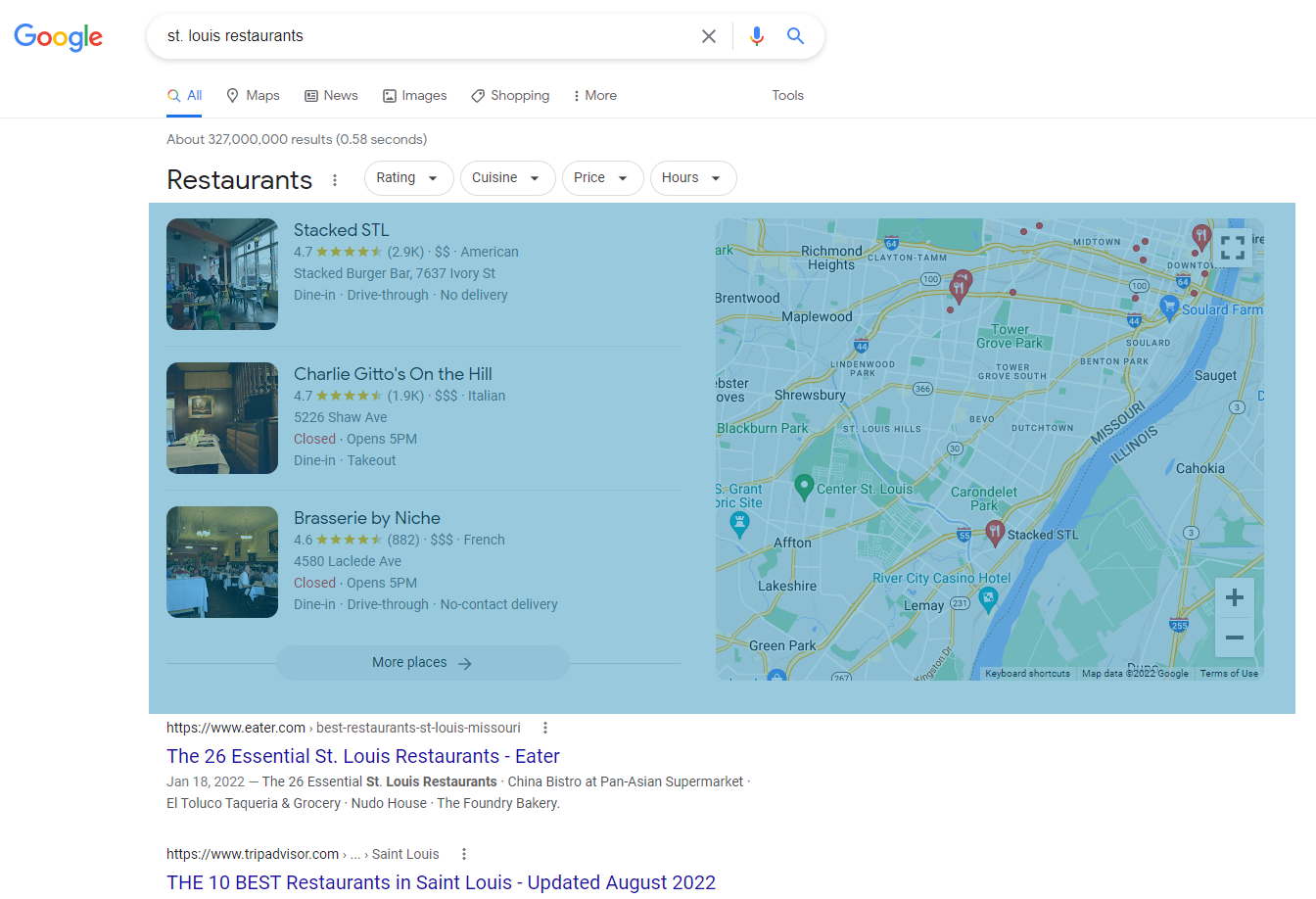
Local Pack
Generates when Google believes a search should be localized. A variety of factors impact these results, including physical location and search modified locations (e.g., Places to eat St. Louis).
Traffic potential for local packs can be high but it's all relative. A local business may think 100 organic visits a month is high, when in other niches you wouldn't even prioritize that kind of volume.
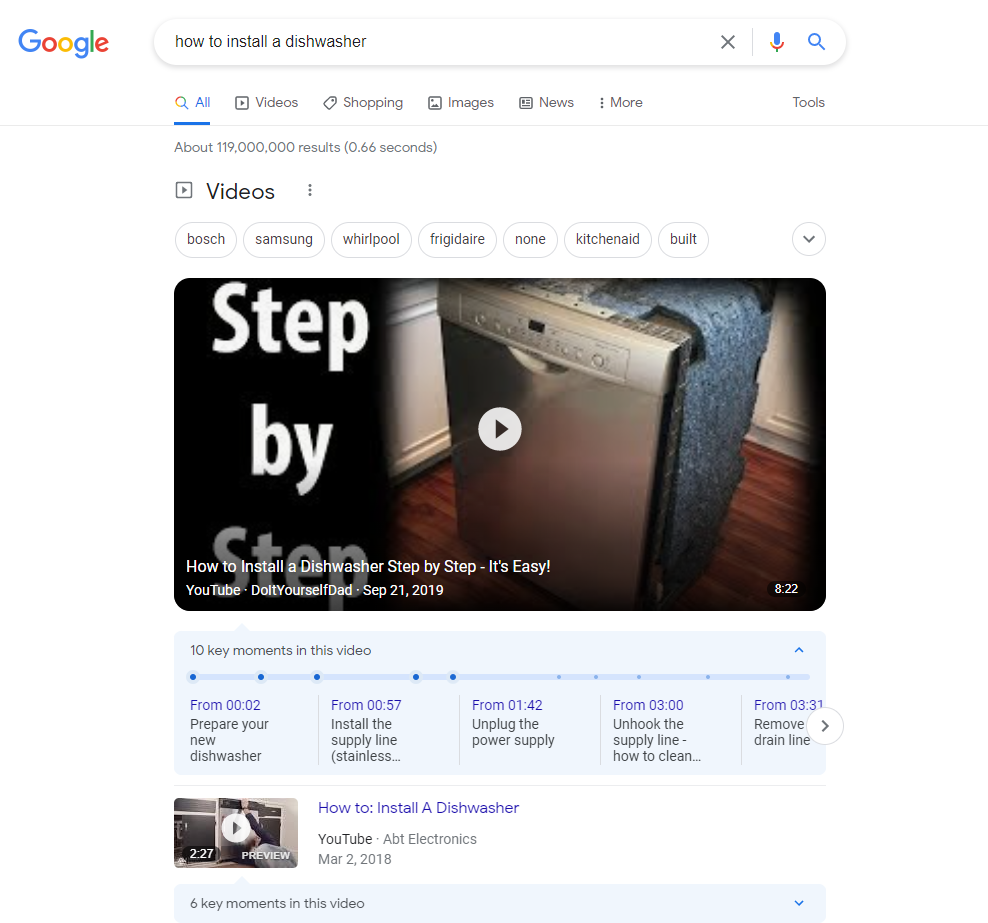
Video Box with key Moments
Video boxes are videos marked up with structured data that break down key moments in the video. These often show for "how-to" terms. While technically any video marked up with structured data can get these, it's typically only YouTube videos that show here.
Traffic to your website is fairly low, but traffic to YouTube can be moderate-to-high depending on the query and placement of the Video box.
The Kitchen Sink
Sometimes Google doesn't know what you want and just throws everything at you.